Paracetamol vs Ibuprofen: Which Should You Reach For?
Paracetamol and ibuprofen are among the most commonly used pain relievers in Cambodia, but they work differently. Learn when each medicine is the better choice, who should avoid them, and how to use them safely.

Pain and fever are common symptoms caused by infections, headaches, muscle aches, dental problems, or minor injuries. Many Cambodian families keep paracetamol or ibuprofen at home, but choosing the right medicine is not always straightforward.
Although both medicines help reduce pain and fever, they work differently and are suitable for different situations. Understanding these differences can help you make safer and more effective decisions for yourself and your family.
What is Paracetamol?
Paracetamol (also called acetaminophen in some countries) is a medicine used to relieve:
- Fever
- Headaches
- Toothache
- Mild to moderate pain
- Cold and flu symptoms
Paracetamol works by affecting the brain’s pain and temperature regulation but does not significantly reduce inflammation.
Advantages of Paracetamol
- Effective for reducing fever
- Gentle on the stomach
- Suitable for most adults and children when used correctly
- Often recommended during pregnancy after medical advice
- Good choice for people with stomach ulcers
Possible Risks
Paracetamol is generally very safe when taken at the recommended dose. However, taking too much can cause serious liver damage.
Always:
- Follow the dosing instructions
- Avoid taking multiple medicines containing paracetamol at the same time
- Limit alcohol intake while using paracetamol
What is Ibuprofen?
Ibuprofen belongs to a group of medicines called Non-Steroidal Anti-Inflammatory Drugs (NSAIDs).
It helps relieve:
- Fever
- Pain
- Inflammation
- Swelling
Ibuprofen is especially useful when pain is caused by inflammation.
Common Uses
Ibuprofen may work better than paracetamol for:
- Sprains and strains
- Sports injuries
- Back pain
- Arthritis
- Menstrual cramps
- Dental pain with swelling
Advantages of Ibuprofen
Ibuprofen provides pain relief while also reducing inflammation, making it particularly helpful for injuries and swollen tissues.
It often lasts between 6–8 hours depending on the dose.
Possible Risks of Ibuprofen
Ibuprofen is not suitable for everyone.
It may increase the risk of:
- Stomach irritation or ulcers
- Gastrointestinal bleeding
- Kidney problems
- Worsening asthma in some individuals
- Increased cardiovascular risk with prolonged high-dose use
Avoid ibuprofen unless advised by your healthcare professional if you:
- Have stomach ulcers
- Have severe kidney disease
- Have uncontrolled heart failure
- Are allergic to NSAIDs
Are in the third trimester of pregnancy
Stay updated on health & medicines in Cambodia
Join our community for health tips, medicine guides and more.
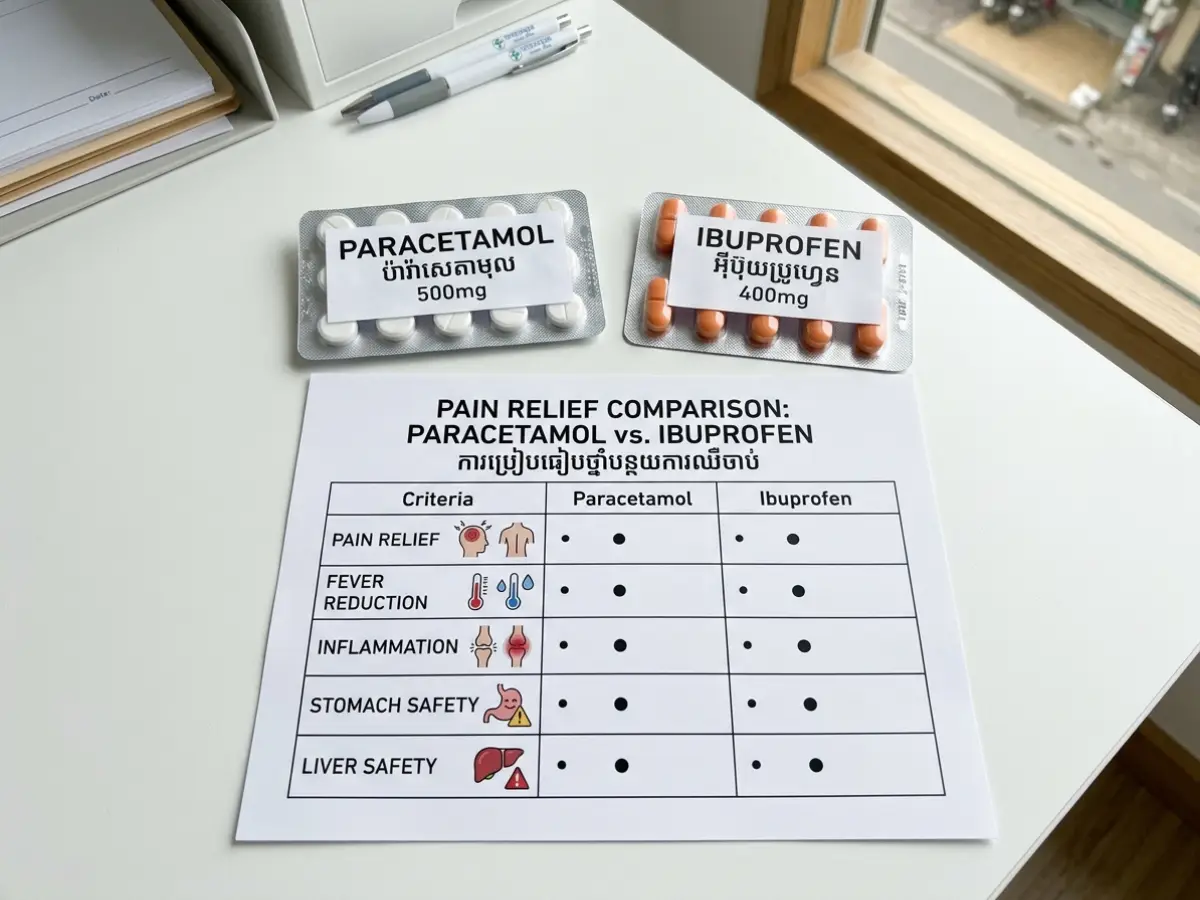
Paracetamol vs Ibuprofen: Key Differences
| Feature | Paracetamol | Ibuprofen |
|---|---|---|
| Reduces fever | ✔ | ✔ |
| Relieves pain | ✔ | ✔ |
| Reduces inflammation | ✘ | ✔ |
| Gentle on stomach | ✔ | Less so |
| Suitable for stomach ulcer patients | Usually yes | Usually no |
| Risk of liver damage if overdosed | Yes | Rare |
| Risk of stomach bleeding | Very low | Higher |
Which Should You Choose?
Choose Paracetamol if you have:
- Fever
- Headache
- Mild body aches
- Cold or flu symptoms
- Sensitive stomach
History of stomach ulcers
Choose Ibuprofen if you have:
- Muscle injuries
- Sprains
- Swollen joints
- Arthritis
- Menstrual pain
- Dental pain with inflammation
If you are unsure, consult a qualified healthcare professional before taking any medicine.
Can You Take Both Together?
In some situations, healthcare professionals may recommend alternating or combining paracetamol and ibuprofen for better pain or fever control.
However, this should only be done according to professional advice to avoid dosing errors or unnecessary side effects.
Never exceed the recommended daily dose of either medicine.
Tips for Safe Use
- Read the medicine label carefully.
- Take only the recommended dose.
- Do not use pain relievers for longer than necessary.
- Drink plenty of water, especially when taking ibuprofen.
- Keep medicines out of children’s reach.
- Seek medical attention if pain or fever persists for more than a few days.
When Should You See a Doctor?
Seek medical care if:
- Fever lasts more than 3 days
- Severe pain continues despite medication
- You experience difficulty breathing
- You notice blood in vomit or stools
- You develop severe abdominal pain
- A child appears unusually sleepy or difficult to wake
Frequently Asked Questions
Key Takeaway
Paracetamol and ibuprofen are both effective medicines for relieving pain and fever, but they are not interchangeable. Paracetamol is usually the better option for fever and general pain, especially for people with sensitive stomachs, while ibuprofen is more effective for pain caused by inflammation, such as muscle injuries, arthritis, and menstrual cramps. Always use the correct dose, read the medicine label carefully, and seek medical advice if symptoms persist or if you have underlying health conditions.
This article is for general education purposes only and does not constitute medical advice. Always consult a qualified healthcare professional or pharmacist before making any health decisions.
Related articles

Why You Must Tell Every Doctor Every Medicine You Are Already Taking — Even Vitamins
Managing Dengue Fever at Home — Why Ibuprofen Is the One Medicine You Must Avoid