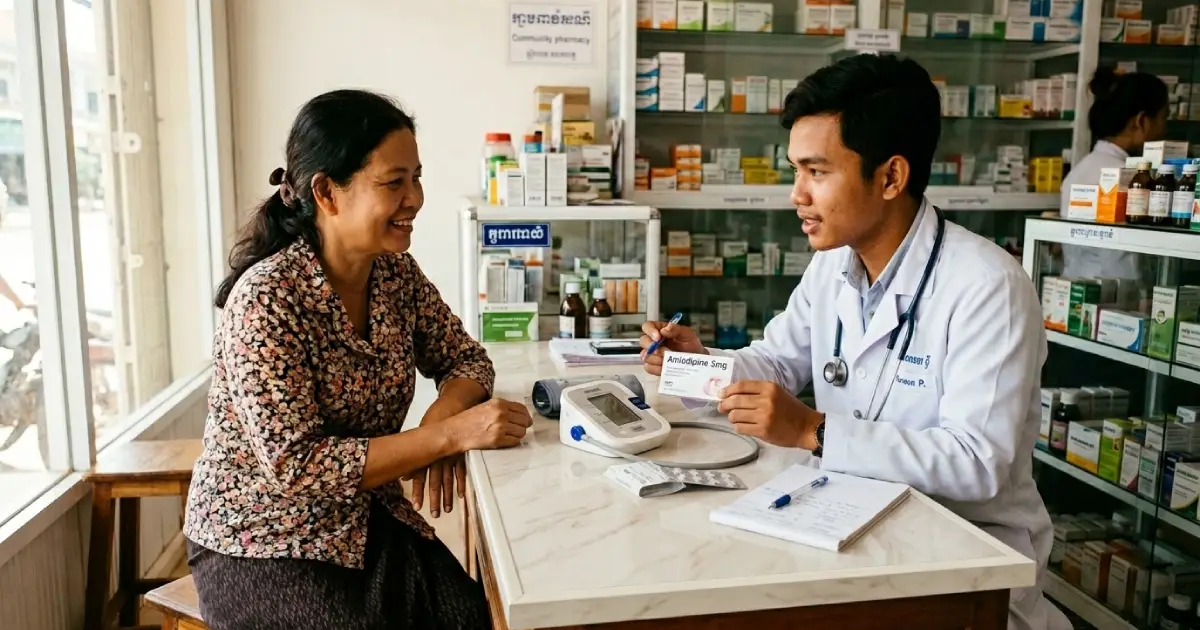
Managing Diabetes in Cambodia’s Climate and Food Culture
Living with diabetes in Cambodia presents unique challenges due to the hot tropical climate, traditional food culture, and busy lifestyles. Learn practical, evidence-based strategies to manage blood sugar while still enjoying Khmer cuisine and staying healthy throughout the year.
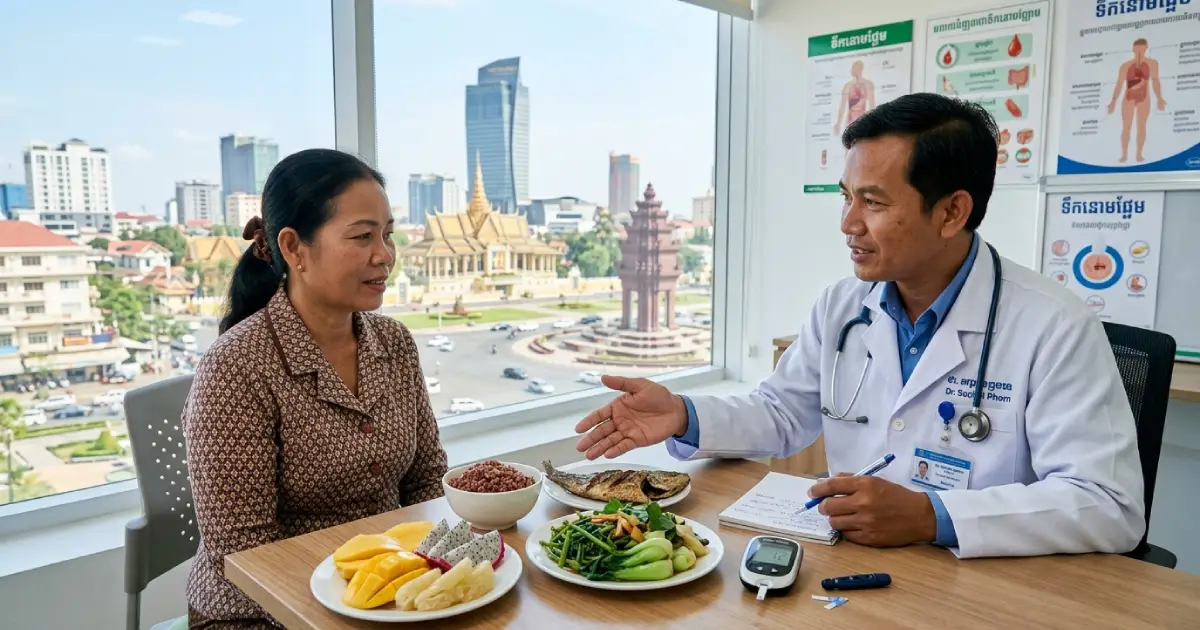
Diabetes is becoming increasingly common in Cambodia as lifestyles, eating habits, and life expectancy change. Whether you have Type 1 diabetes, Type 2 diabetes, or prediabetes, good management allows you to live a healthy and active life.
Cambodia’s tropical weather, delicious Khmer cuisine, and frequent social gatherings can all influence blood sugar levels. Understanding how these factors affect your health helps you make better daily decisions without giving up your favorite foods.
Understanding Diabetes
Diabetes occurs when the body cannot properly regulate blood glucose (blood sugar). High blood sugar over many years can damage the heart, kidneys, eyes, nerves, and blood vessels.
Common symptoms include:
- Frequent urination
- Excessive thirst
- Increased hunger
- Unexplained weight loss
- Blurred vision
- Slow wound healing
- Frequent infections
- Fatigue
Some people have no symptoms, making regular health screening especially important.
How Cambodia’s Climate Affects Diabetes
Cambodia experiences hot temperatures throughout most of the year, often exceeding 35°C.
Hot weather can affect diabetes management by:
- Increasing the risk of dehydration
- Changing how insulin is absorbed
- Making blood sugar levels less predictable
Increasing the risk of heat exhaustion
Tips for Staying Safe
- Drink plenty of water throughout the day.
- Avoid sugary soft drinks and sweet iced beverages.
- Carry water when travelling.
- Store insulin according to the manufacturer’s recommendations.
- Monitor blood glucose more frequently during very hot days.
Stay updated on health & medicines in Cambodia
Join our community for health tips, medicine guides and more.
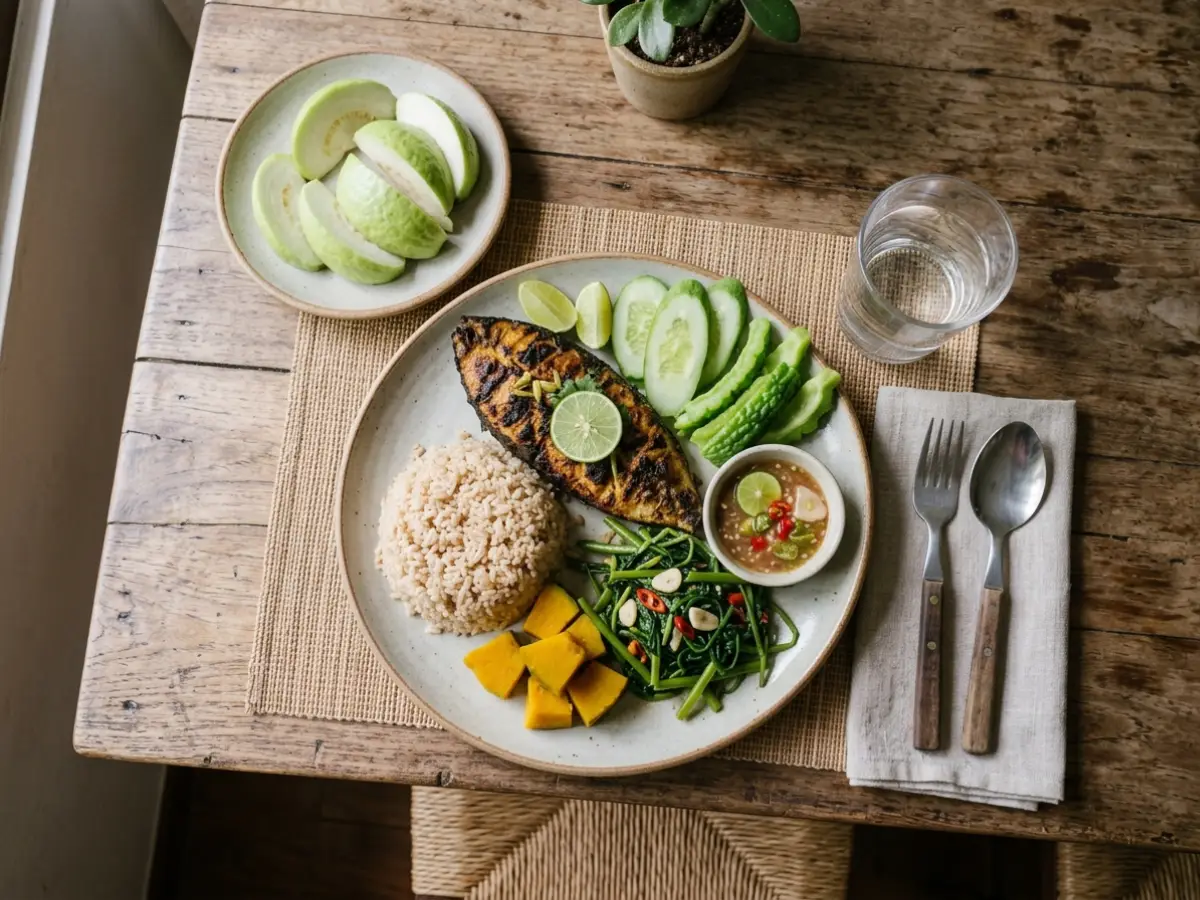
Enjoying Khmer Food While Managing Diabetes
Traditional Cambodian cuisine can be part of a healthy diabetes diet when portions are balanced.
Choose More Vegetables
Fill half of your plate with non-starchy vegetables such as:
- Morning glory (Trakuon)
- Bok choy
- Cucumber
- Cabbage
- Green beans
- Pumpkin
- Bitter melon
These foods provide vitamins, minerals, and fiber that help control blood sugar.
Control Rice Portions
Rice is a staple food in Cambodia.
Instead of eliminating rice completely:
- Eat moderate portions.
- Choose brown rice when available.
- Balance rice with vegetables and lean protein.
Eating smaller portions of rice with more vegetables helps reduce blood sugar spikes.
Choose Healthy Protein
Good protein choices include:
- Fresh fish
- Chicken without skin
- Lean pork
- Eggs
- Tofu
- Beans and legumes
Protein helps maintain muscle and slows digestion, supporting better blood glucose control.
Be Careful with Sweet Drinks
Many popular Cambodian beverages contain large amounts of sugar, including:
- Sweet iced coffee
- Milk tea
- Bubble tea
- Soft drinks
- Sweet fruit juices
Better options include:
- Plain water
- Unsweetened tea
- Soda water without sugar
- Black coffee without added sugar
Tropical Fruits: Eat Smart
Fruit is healthy but still contains natural sugars.
Enjoy moderate portions of:
- Guava
- Papaya
- Dragon fruit
- Pomelo
Limit large portions of very sweet fruits such as:
- Ripe mango
- Longan
- Lychee
- Jackfruit
- Durian
Eating fruit after meals rather than alone may help reduce rapid blood sugar increases.
Managing Diabetes During Khmer Festivals
Festivals such as Khmer New Year, Pchum Ben, and family celebrations often involve larger meals and desserts.
You do not need to avoid celebrations.
Instead:
- Eat smaller portions.
- Eat vegetables first.
- Drink water instead of sugary beverages.
- Stay physically active.
Continue taking medications as prescribed.
Stay Active Every Day
Regular physical activity improves insulin sensitivity and helps lower blood sugar.
Good activities include:
- Walking around your neighborhood
- Cycling
- Traditional dancing
- Swimming
- Gardening
- Household chores
Aim for at least 150 minutes of moderate exercise each week.
Because Cambodia is hot, exercise early in the morning or later in the evening to reduce heat stress.
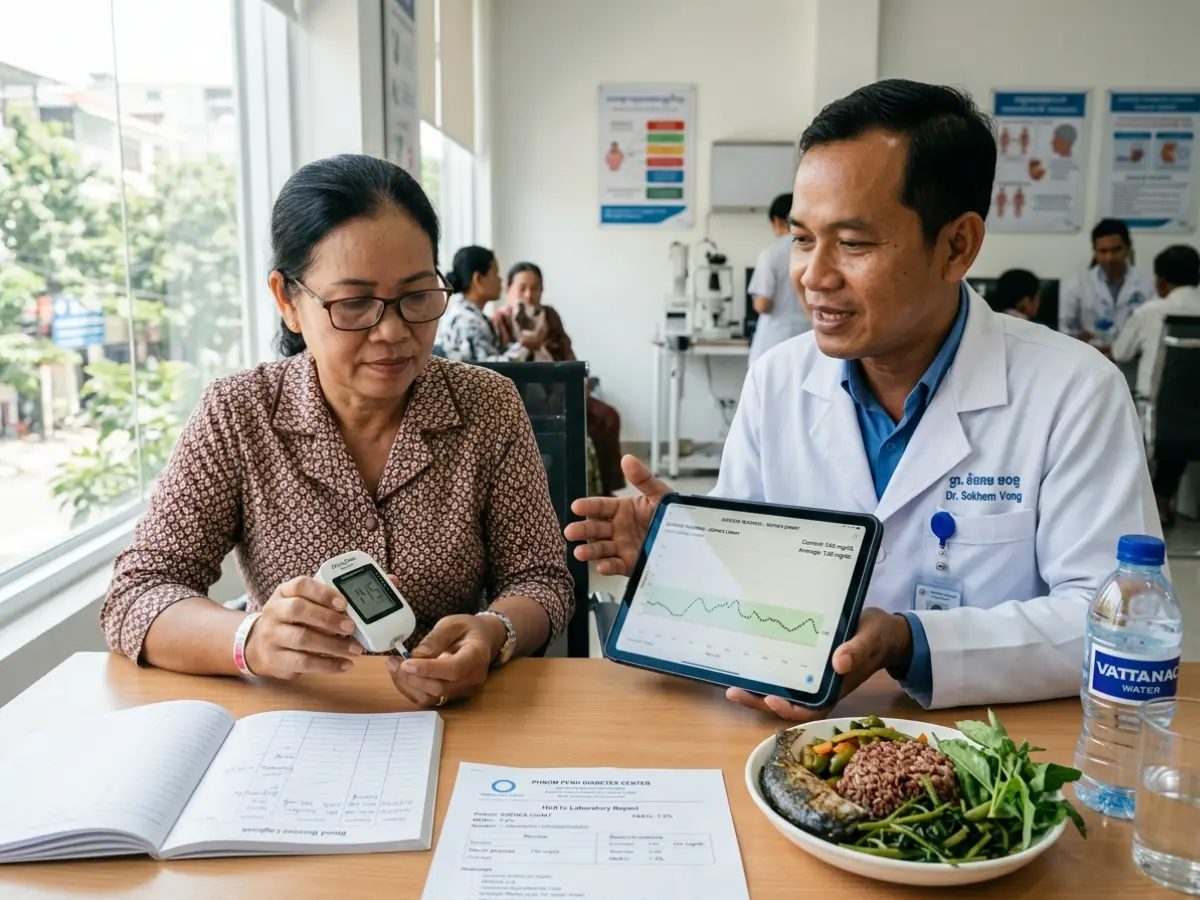
Monitor Your Blood Sugar
Regular blood glucose monitoring helps you understand how food, exercise, illness, and medication affect your diabetes.
Your healthcare provider may also recommend HbA1c testing every three to six months to assess long-term blood sugar control.
Don’t Skip Medical Check-ups
Routine diabetes care should include:
- Blood pressure monitoring
- Cholesterol testing
- Kidney function tests
- Eye examinations
- Foot examinations
Early detection of complications allows treatment before serious damage occurs.
Foot Care is Essential
Diabetes can reduce sensation in the feet, making injuries difficult to notice.
Every day:
- Check your feet for cuts or blisters.
- Wash and dry your feet carefully.
- Wear comfortable shoes.
- Avoid walking barefoot.
Seek medical attention promptly if wounds do not heal.
Frequently Asked Questions
Key Takeaway
Managing diabetes in Cambodia requires balancing healthy eating, regular exercise, hydration, medication adherence, and routine medical care. By making smart food choices within Khmer cuisine and adapting to Cambodia’s tropical climate, people with diabetes can maintain good blood sugar control and reduce the risk of long-term complications.
This article is for general education purposes only and does not constitute medical advice. Always consult a qualified healthcare professional or pharmacist before making any health decisions.
Related articles